Sunday, January 27, 2013

Get It Right: Affect And Effect

It's been far too long since we've done a condescending post on correct usage of the English language (our last one was on further and farther back at the start of December!) and we felt it was time to do another.

Today we're looking at one of the simplest errors. If you know anything about words and their classification is makes this very easy.
 
No jokes about the gender of the driver, please!
Affect

Affect is a verb. It means something is doing something. Something affects something else. Since it's a verb it can be conjugated which means, in English, that it can have the -ed suffix in the past tense. There is no such word as effected.

For example: Drinking ten pints of strong continental lager seriously affects your ability to drive.
 
Effect

Effect is a noun. A noun, put simply, is a thing or a concept. If preceded by the or a then it's effect you need.

Example: The effects of drinking alcohol are detrimental to one's ability to drive.

Saturday, January 26, 2013

Happy Birthday Edward Sapir!

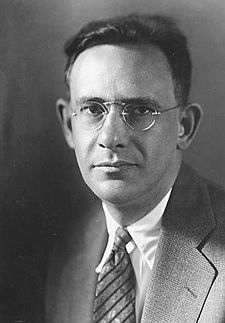
Today, if you hadn't guessed by the title, is Edward Sapir's birthday. Unfortunately, he's dead. Fortunately, his legacy lives on the world of linguistics.

It's not a bad place to be educated.
Born to "German" parents, the place where he was born was actually in Prussia, which is now Poland. He moved to the U.S. where he studied Germanic linguistics at the University of Columbia, which is still one of the top language universities in the United States. It also allowed Jewish students in without any limitations, unlike other universities at the time.

His most important work included the classification of Native American languages. His work with Native American languages was even featured in the Encyclopædia Britannica. He took particular interest in the Athabaskan language family.

Sapir's other famous "work" included the Sapir-Whorf Hypothesis. Despite the name, Sapir never co-authored any work with Whorf and, in fact, never made a hypothesis. It's just a useful label put on to some of the work he did in terms of linguistic relativity, just like Whorf.

The Sapir-Whorf Hypothesis stipulated that the way people think, their cognitive processes, are affected by language. The idea that Inuits have several words for snow was an example used by Whorf to explain the hypothesis. It was, of course, found to be false.

Edward Sapir's work will be remembered for quite some time, not just amongst linguists, but also by everyone who wrongly quotes that "Inuits have hundreds of words for snow"!

Towards the end of his life Sapir was the head of Anthropology at Yale, where he continued to work on the relationship between anthropology and languages. Amazingly, few before him had thought that there'd be a link between the two!

He died in 1939 in New Haven, Connecticut.

Friday, January 25, 2013

Word Categories for Dummies

We often mention certain aspects of words and it only just occurred to us that we haven't ever explained what they are. Just in case you've been a little confused in the past, we've provided a little glossary of the classifications of words for you.

Time for another...
Nouns

Nouns are things. Most things that can be preceded by the or a (which we'll get into later) are nouns. Examples include everyday things such as house, bed, cat and dog, as well as concepts such as love, hate, anger and envy, to name a few. If there's a name for something it's most likely a noun. Beer is a noun and we'll be using it in every example.

Example: "A beer."

Verbs

If you remember covering verbs in school, you were probably told that verbs are doing words. Verbs are actions pretty much 100% of the time. They conjugate as well, meaning that their stem will change based on who or what is doing the action. The change in the verb means that we can explain things in the past, present and future, not to mention concepts such as the conditional and even subjunctive.

Example: "I like beer."

Personal pronouns

The personal pronouns in English include: I, you, he, she, it, we, you (plural), and they when they are the subject, meaning the thing that does the verb. If this isn't the case then you'll have to use me, you, himherit, us, you, and them when they are the object, the thing that is getting something done to it.

Example: "I hit him because he took my beer."

Things would be different in my pub!
Possessive pronouns

If someone or something owns something then you'll need the possessive pronoun. They include mine, yours, hishersits, ours, yours, and theirs.

Example: "The beer was mine."
 
Relative Pronouns

Relative pronouns join parts of sentences together. Words such as who, whom, whose, which, and that can all be relative pronouns. Put simply, when the latter part of a sentence requires one of those words, odds are that you have yourself a relative pronoun.

Example: "This is the beer which I drank."
 
Adjectives

Adjectives add qualities and details to nouns, they're describing words. If something is big or small, fat or thin then you've got yourself an adjective.

Example: "I love a cold beer!"
 
Adverbs

Adverbs work much in the same way as adjectives, except they add details to verbs. They explain how a verb is done. Many of them in English use the suffix -ly, so you can better explain how something was done.

Example: "I quickly drank my beer as the bar was closing."

Articles

Articles are a type of determiner and come in two forms, definite and indefinite. The definite article, the, implies that the listener or reader knows which thing you're talking about.

Example: "Where is the beer?"

The indefinite article is used when the listener or reader may not know which thing you are referring to, or it's not important.

Example: "I would like a beer."

Conjunctions

Conjunctions work in a similar way to relative pronouns. They constitute "connecting words" and most of words you were told to never told to start a sentence with. Words such as and, but, for, or, yet, so, and nor are all conjunctions.

Example: "I drank a beer but I can still drive."
 
Prepositions

A preposition is a word that usually explains where something is in relation to something else. Words such as in, on, over and under are all prepositions. They can also refer to semantic concepts such as of and for.

Example: "My beer is in my hand."

Interjections

Interjections are words for emotions and sentiments. Most of them are followed by an exclamation mark.

Example: "Wow! What a fantastic beer!"

Now get to the pub to show off
your new knowledge!
Determiner

Determiners are an interesting classification of words. Their main function is to clarify or determine a noun or noun phrase. Examples include articles as well as possessives pronouns, both of which we mentioned before. So what aren't determiners?

Nouns and verbs are definitely not determiners. Determiners can be articles, possessives, demonstratives such as this and that, as well as quantifiers such as some, all, few and many.

Numbers both cardinal (one, two, three) and ordinal (first, second, third) are also considered determiners as they mention how many of a certain noun there are or what order they came in.

Example: "This beer is mine!"

The main criticism of word categories is that, as you have seen, it tends to pigeon-hole words into just one category. Many words can be many things, so is it productive to categorise them thus? What do you think? The comments are below if you have something to say...

Tuesday, January 22, 2013

Top Language Universities: UK

Last week we covered the top language universities in the US and now we're covering the top choices for students in Blighty. Who said Brits were no good at languages!?

Durham Castle
Durham University

Nestled away in the North East of England, Durham ranks as a top 100 university. The language programme, however, does not. It creeps in the top 10 for UK language universities but is actually considered just outside of the top 100 for the world. If you can brave the cold north, this may be the university for you.

University of York

Another beautiful historic city in the north of England. The University of York doesn't make the top 100 universities for the world, but it does when it comes to languages so we can forgive them. Those with a soft spot for history should definitely look in to York, especially if you like Vikings.

The Clifton suspension bridge.
University of Bristol

If the wonderful Bristolian accent hasn't already cemented your decision, the fact that only a few universities in the UK can boast a better language programme should. It should be noted that graffiti artist Banksy hails from Bristol and his works can be spotted around the city. If that's not your cup of tea, then there are plenty of historical sites and a pretty impressive bridge.

The University of Warwick

Although not technically in Warwick geographically speaking, the University of Warwick has become one of the UK's most well-respected academic institutions. The language course is no exception.

Manchester Cathedral
The University of Manchester

If you only know Manchester for its football teams then shame on you! Manchester boasts a well-respected university as well as a gorgeous cathedral. It's also home to the Gallagher brothers of Oasis fame, but don't let that put you off. Their music wasn't bad, though.

SOAS - School of Oriental and African Studies, University of London

If the name didn't give it away, this school is the place to go when it comes to African and Asian languages. It's also the only school of its type in the UK. It's not advised, however, if you're looking to study European languages.

UCL (University College London)

Don't let the name confuse you. UCL is a British university. University College London is one of the UK's most prestigious universities and has the language department to match. Overall, UCL outranks Oxford in the world rankings. If you think you can survive the hustle and bustle of the UK's capital, then this should definitely be one of your first choices.
 
Cockburn Street, Edinburgh
University of Edinburgh

The capital is where you'll find Scotland's best university when it comes to languages. For those lucky Scots that enjoy the advantages of no tuition fees, it would be silly to opt for the next two if you can get your degree for free!

University of Cambridge

You probably imagined that Cambridge would be high up on the list. Given that we haven't mentioned Oxford, then you can guess what's coming next. That said, it doesn't take anything away from the high quality of education provided at one of the UK's most prestigious universities. Cambridge can still boast finishing higher in the top 100 overall than their rivals at Oxford.

University of Oxford

While Cambridge may have the bragging rights when it comes to ranking the entire institution, Oxford is still the cream of the crop when it comes to language departments. Oxford should probably be the top pick for anyone wanting to study languages in the UK. If you can get in, that is.

Sunday, January 20, 2013

Collocation: How Words Go Together

In linguistics, collocation refers to words that appear together more frequently than expected. It's how words go together, though not like "rama lama lama" as Grease would have us believe. Though rama and lama probably do exhibit collocation to a certain extent.

For native speakers of a language, the collocations are almost second nature. Most English speakers know that you make a decision rather than do a decision. The fact that "make" occurs more frequently with the word "decision" is a syntactic relation. Many speakers of languages that do not have a distinction between the words "do" and "make", such as French and Spanish, will often find themselves making this mistake, causing the English speakers with them to wince slightly at the inelegance of the phrasing.

It can also be used to make funky lines...
Collocation can be measured by brainy mathematicians using all sorts of crazy functions that we don't even want to fathom. Certain methods include using the log-likelihood, (it's not something you consider on your first visit to the toilet after a curry), as well as other statistical analysis methods.

You know when you're witnessing collocation, especially within the speech of a foreign speaker. It's the feeling every native speaker will get when they can't explain why a sentence is wrong but know that it just sounds wrong.

Even with all the mathematics behind finding collocation, all it takes is a sentence that feels awkward.

Saturday, January 19, 2013

January 19: Edgar Allan Poe's Birthday

Although he's dead and has been for some time, we're still celebrating Edgar Allan Poe's birthday today. He would be 204 today, and we think he deserves at least a post for his troubles.

If you were unable to subtract 204 from 2013, you should know that he was born in 1809 and only lived to age 40. He was born Boston, Massachusetts and briefly attended schools in Irvine, Chelsea and Stoke Newington in the United Kingdom before eventually settling with his foster family, the Allans, in Richmond, Virginia.

He spent about a year at the newly established University of Virginia studying ancient and modern languages, but ended up dropping out. As an 18 year-old (although he said he was 22), he enlisted in the army and served as a private at Fort Independence in Boston Harbor. His first book, Tamerlane and Other Poems, was released the same year. It was pretty much a horrendous failure, with only 50 copies published that few took notice of.

When he actually reached 22 his elder brother died, due in part to alcoholism. Poe focused on his writing and struggled, like many do, to make ends meet. After a few publications he was noticed by John P. Kennedy, who helped him in classic business style by introducing him to a few movers and shakers. This helped land him a job as the assistant editor for the Southern Literary Messenger in Richmond until he lost his job for being drunk.

They were kind of sweet, though. Virginia wrote
this acrostic poem for Edgar one Valentine's Day.
In a part of his life that should be brushed over, Poe, quite disgustingly, married his 13 year-old cousin, Virginia, in Baltimore. The ceremony was held in secret, though he did later marry her in public. He eventually got his job back at the Southern Literary Messenger and returned to Richmond.

He stayed at the Messenger until 1837, and afterwards published the majority of his works. His cousin-wife fell ill to tuberculosis and Poe, who was already fond of booze, started drinking more. Virginia died in 1842, which obviously didn't help Poe's drinking problem either.

Poe went out with a few other women following his wife's death but with little success. More often than not his drinking problem and erratic behaviour got in the way. Poe was eventually found in a bad state on 3rd October 1849. Supposedly delirious and calling out "Reynolds", he later died at Washington College. All records concerning the cause of his death have been lost, so it remains a mystery. 

While Edgar Allan Poe had quite an erratic life, he is most known for the mark he left upon literature. During his lifetime, he was known not as a writer but as one of the fiercest of literary critics. Later in his short life, he began to gain notoriety for his short stories and poetry. His works were dark, and many of his stories and poems dealt with death. He was one of the first Americans to write short stories, and is even credited by some, including Sir Arthur Conan Doyle (the writer of the Sherlock Holmes stories), to have invented the detective fiction genre.

An 1858 illustration for "The Raven"
done by John Tenniel. 
Two of his most famous works are "The Tell-Tale Heart" and "The Raven". The first is a short story in which the narrator tries to convince you that he's sane while describing a murder he has committed. Eventually, he begins to hear the beating of his victim's heart from under the floorboards. We won't spoil the details of the story for you if you haven't read it, but it's definitely an interesting read if you're not too squeamish. 

You may also know his narrative poem entitled "The Raven", especially if you're a fan of The Simpsons. It tells of an upset lover and a mysterious talking raven that appears and repeatedly utters the word "nevermore" to him. However, as we pointed out yesterday, there are no such things as talking birds. Most of Poe's stories were quite dark, and we can only imagine that had to do with his life. Nevertheless, he left an indelible mark on literature, especially the mystery genre. The Edgar Award is even given out each year by The Mystery Writers of America for distinguished work in the genre. Last year's winner was a British author named Mo Hayder, for her novel Gone.

Friday, January 18, 2013

Why Parrots Can't Talk

You've all seen them. Parrots are without a doubt the most devious "language users" on the planet. They mimic the sounds of language but lack the ability to speak.

"Be quiet when I'm talking!
What parrots do when they talk is nothing more than a parlour trick. They respond to cues and replicate sounds that, to humans, are very similar to speech.

When a parrot says "hello" it doesn't understand that it's greeting people. All it does is respond to whichever cue the trainer has designated as "hello" and responded, usually seeking a reward such as a cracker.

Parakeets and budgerigars (you know them as "budgies") are also known to be good at "talking". One budgie known as Puck held the Guinness World Record for largest vocabulary of any bird with 1,728 words. This is a larger vocabulary than the average reality TV viewer.

Amazon parrots, from the rainforest and not the online marketplace, have a reputation for being good at talking. Although several species of birds have the "equipment" necessary to replicate the sounds of speech, they unfortunately lack the brain capacity to understand languages.

"Could you throw me a fish? I'm hungry!"
However, animals do communicate and dolphins famously will chatter to one another and even to Megan Fox, if we are to believe a recent advertisement we saw. It will probably take millions of years of evolution before animals will communicate like we do, as all those with the brains lack the equipment, while those with the equipment lack the brains.

Chimpanzees have been taught to use sign language to communicate and a few have even become famous for it. Koko the gorilla is famous for her skills in sign language and understanding of words but, like most human males, may have used it to get people to show her their breasts.